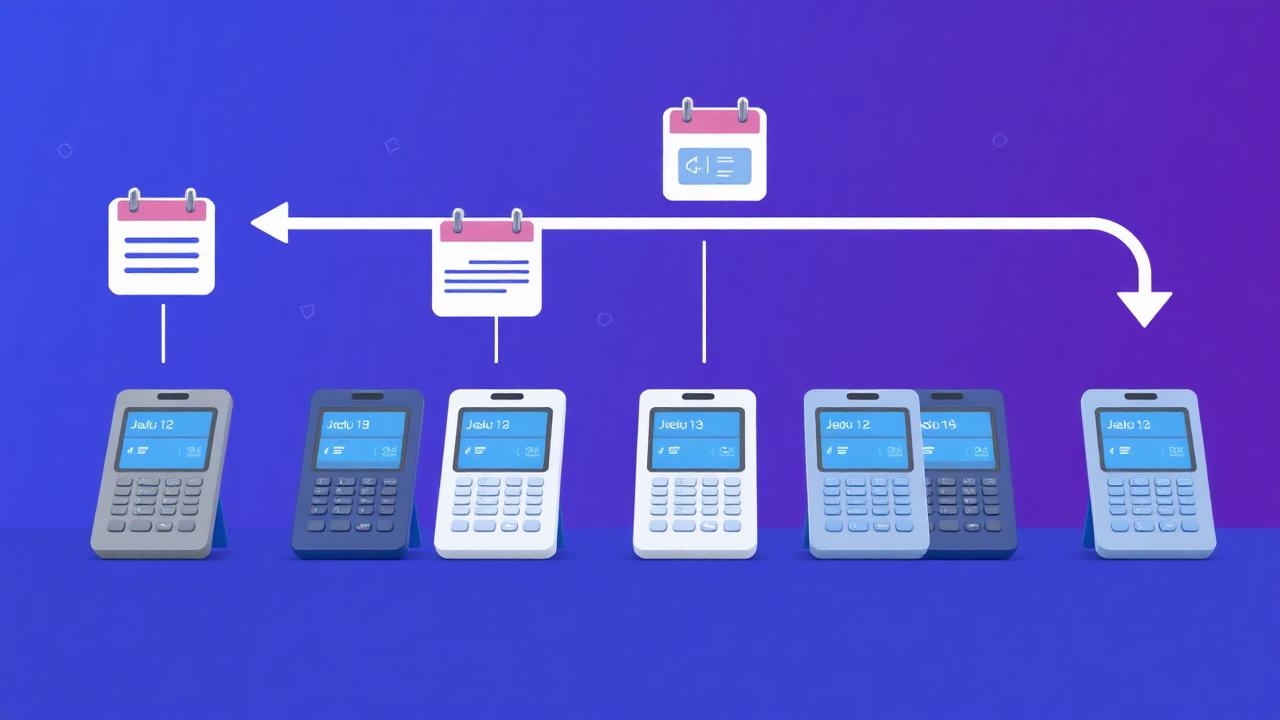
End of life does not mean end of service. Your T42U, T46U and T48U handsets keep working on SV2 - they just cannot be re-ordered, and they will not get the new SV2-only features. That makes them a perfect candidate for a phased refresh rather than a forklift upgrade.
T4 / T5 to T7 / T8 replacement map
Use this as your one-page reference when reordering. Match each end-of-life T4 or T5 model to its closest T7 or T8 equivalent.
Video / Android desk phone
T7 covers mainstream desk roles; T8 is for executive, reception and video use cases. Bring an estate list to your SelectVoice partner for a tailored mapping.
Phase 1 - audit (week 0 to 4)
- Export the phone inventory from SV Manager - model, MAC, location, owner
- Tag any T4 still under accidental-damage cover that should be retired early
- Identify the top 10% of users by call volume - these get refreshed first
Phase 2 - replace the heavy hitters (month 2 to 4)
- Receptionists and team leads move to T77U for touchscreen and Bluetooth
- Sales and support move to T74W for the 4.3 inch display
- Returned T4 phones go into a spares pool, not the bin
Phase 3 - rolling refresh (month 5 to 18)
- Replace remaining T4s with T73U / T73W in batches of 25-50
- Sync the replacement window with each user's home-working day to minimise disruption
- Retire the spares pool last - those phones are insurance during the transition
Lower risk than a single big-bang
Phased refreshes spread cost across two budget cycles and let you validate each batch in production before scaling - a much safer pattern than swapping the whole fleet in one weekend.